DescriptionVery Short Introductions have proven to be extremely popular with general readers, as well as undergraduates and their lecturers.This is an ideal introduction for anyone interested in, or studying, business and management.John Hendry, a leading management scholar, looks at the nature and practice of Management in this Very Short Introduction. Tracing the development of management over the last century, he looks not only at what managers do, but also provides an insight to modern management theory. He considers the influences of national and organizational culture, the relationship between power and domination, managing in different cultures, approaches to management, and at the accountability of managers and morality.Key FeaturesAn authoritative guide to the main principles of managementLooks at the history of management theory and modern practiceConsiders management in a social and cultural contextExplores the issues of morality and accountabilityTable of ContentsPreface and acknowledgements Part 1: Introducing ManagementManagement and managingThe work of the manager Part II: The evolution of management: theory and practiceManagement and authorityRationalising managementSocialising managementIndividualising management Part III: Management in contextManagement across culturesCritical perspectives on managementManagement as sense-makingManagement and morality References and further reading IndexAbout the SeriesOxford’s Very Short Introductions series offers concise and original introductions to a wide range of subjects – from Public Health to Buddhist Ethics, Soft Matter to Classics, and Art History to Globalization. Each volume provides an authoritative and engaging assessment of a concept, field, or body of work, drawing out the central ideas, themes, and approaches. Our expert authors combine facts, analysis, new insights, and enthusiasm to make often challenging topics highly readable to develop your core knowledge. With over 700 titles and many more in development, as well as regularly updated new editions, the series is constantly evolving to reflect a contemporary readership. Whatever your area of study, whatever the topic that fascinates you, the series is an indispensable and accessible guide that will enrich your understanding.Reviews“The Very Short Introductions range from worth reading to wonderfully appealing… Much of the pleasure to be found in them is the bedrock one of good nonfiction: facts… They appeal to us because the world is vast and strange, because everywhere we look, from the firefly flashing in the darkness to Auden’s elegy for Yeats, there is something to provoke our curiosity, some sliver of existence that we want to understand.” – New Yorker Magazine“I have a pile of the Short Introductions and they are uniformly excellent: an ideal way to dip your toe in a topic and, being relatively cheap, allow you to decide whether invest in more expensive tomes. They’re well written by leaders in their area, thought-provoking and insightful.” – Mark Greener, Fortean Times“I absolutely LOVE the VSI series. It’s just so well produced – excellent writing and interesting topics. Just a superb overall series to dive into.” – Grrl Scientist, The Guardian“I love the Very Short Introduction Series as should everyone who is interested in the history of ideas. They manage to straddle that difficult line between making the complex accessible without ever compromising on quality. The sheer range of subjects covered make the series an invaluable asset for anyone trying to understand the development of human thought. They are a must-go-to gateway for those of us keen to know more but needing a steer as to where to start.” – Claire Fox, Director, Institute of Ideas“The Oxford University Press VSI series… is to non-fiction what Penguin Books have always been for literature.” – Jim Cullen, History News Network“Expert, concise but far from bland, Oxford’s Very Short Introductions series must rank by now as a thinking reader’s Wikipedia” – Boyd Tonkin, The Independent“Great price, beautifully designed and produced, authoritative content and inviting subjects covered – if only all publishing hit these heights.” – The Bookseller“a fascinating series of ‘all you need to know’ introductions by experts to complex topics.” – The Times“The Very Short Introductions are fantastically informative books…” – Big Issue in the North“I am addicted to this series of pocket-portable introductory lectures.” – Guardian Review“These Very Short Introductions have a style and integrity all of their own.” – Scotsman“A thoroughly good idea. Snappy, small format … stylish design … perfect to pop in your pocket for spare moments” – The Times“A series of instantly accessible handbooks that neither shame our ignorance nor frighten us with their erudition. All are to be applauded.” – Oxford Times“If there’s anything you ever wanted to know more about … grab yourself one of these little beauties.” – Sarky Cutt, Greenwich University“These perfect books form a solid grounding in various subjects, stretching from the Bible and the Koran, to Social and Cultural Anthropology … interesting, informative and concise, they combine to make a beautiful set. They will broaden your studies, widen your knowledge and maybe give you a chance of winning those pub quizzes once in a while!” – The Beaver, LSE“Would make a useful addition to any bookshelf, and their size makes them ideal for carrying around” – Humanist Philosophers Group“Attractively packaged and, very importantly these days… attractively priced. They are the sort of books that can be read in a couple of evenings but repay further study.” – The Philosophers Review“Always invigorating” – Independent on SundayAuthor BiographyJohn Hendry, Fellow of Girton College, Cambridge and Emeritus Professor of Management, Henley Business School, University of ReadingJohn Hendry has been teaching management for over 25 years. He was Founder Director of the University of Cambridge MBA, Head of the University of Reading Business School and Deputy Dean of Henley Business School, and has also served on the faculties of London Business School, Cranfield School of Management and the Mendoza School of Business at the University of Notre Dame. His research in business strategy and organizations, business ethics and corporate governance has been published in many of the leading management journals. He has worked in large business and accounting firms and the public sector and currently chairs a theatre production company in London’s West End.
You may also like…

Related products
-
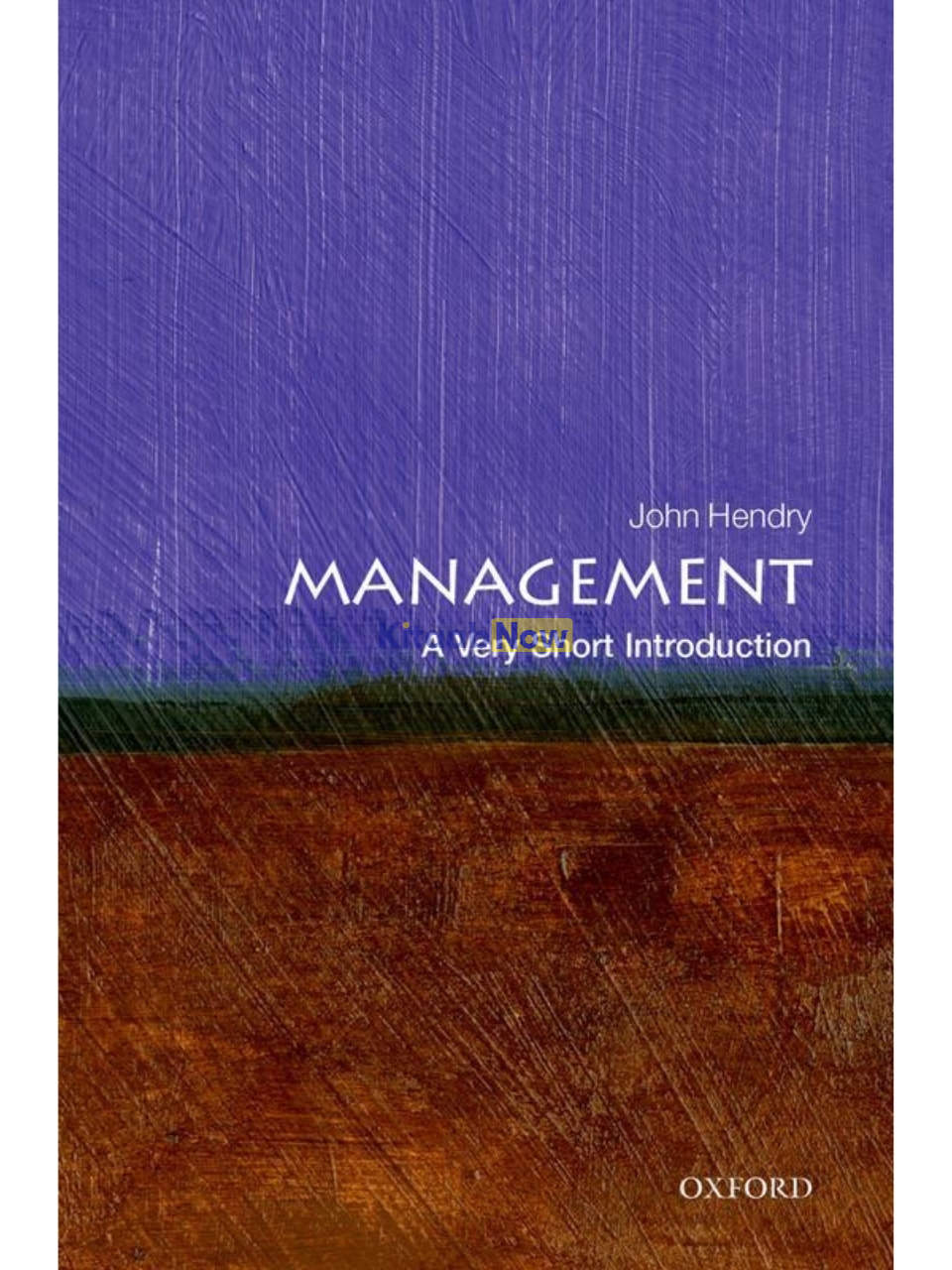
Management: A Very Short Introduction
$ 2.96 -
 Sold Out!
Marketing Management (2nd Edition)
$ 1.46 -
 Sold Out!
Operations Management: Processes and Supply Chains (12th Edition)
$ 7.81 -

Management Information System (2nd Edition)
$ 5.05